如果你也持仓标普、AI 以及半导体
If You Also Hold the S&P 500, AI, and Semiconductors
English translation by AI · 英文由 AI 翻译
Translated from Chinese by AI. Tap any paragraph to see the original.
梳理标普与 AI 半导体的潜在风险点,聚焦资本支出指引、折旧压力与毛利率均值回归,警惕指数冲高后的剧烈回撤
Mapping out potential risk factors for the S&P 500 and AI semiconductors, focusing on capex guidance, depreciation pressure, and gross margin mean reversion, while warning against severe drawdowns after index surges.
非投资建议
Not investment advice
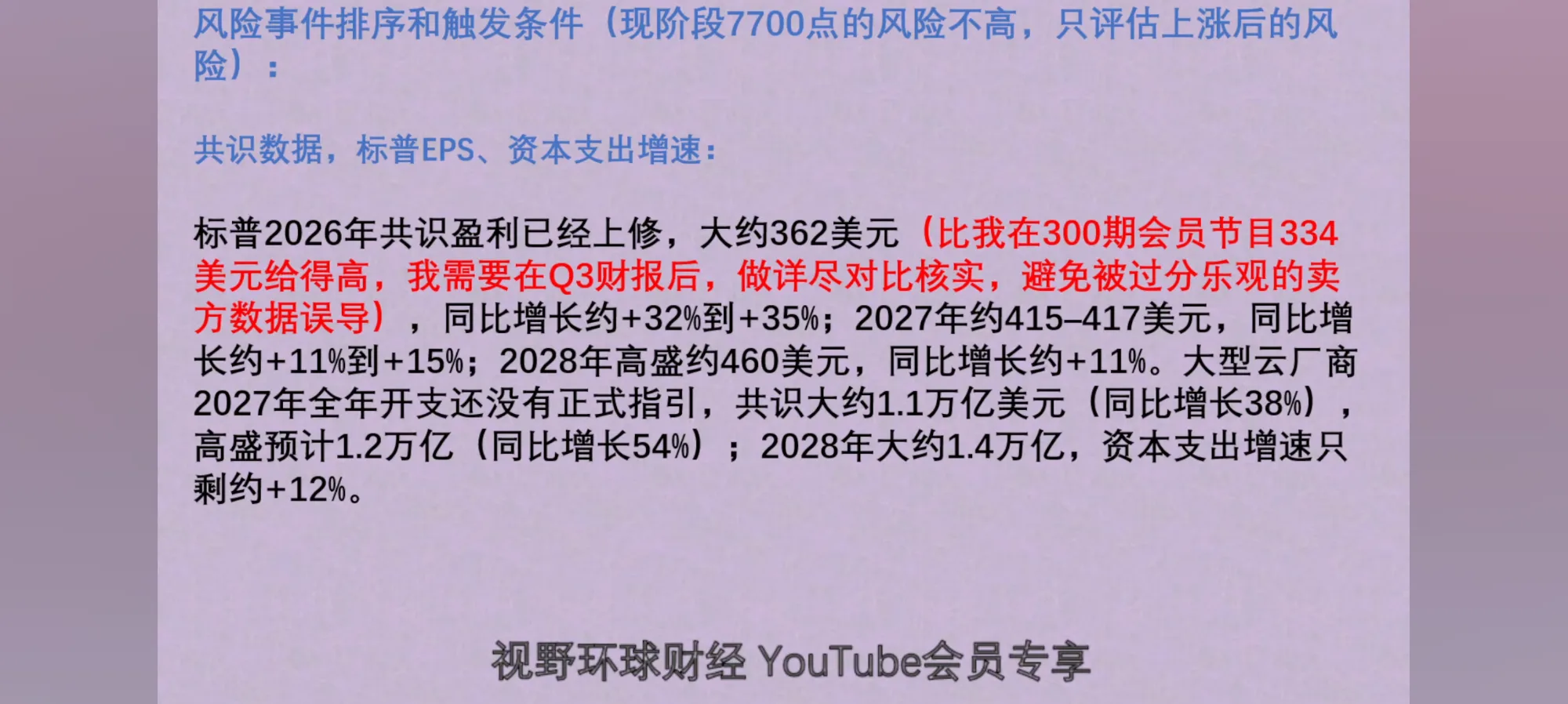
风险事件排序和触发条件(现阶段 7700 点的风险不高,只评估上涨后的风险):
Ranking of risk events and triggering conditions (at the current 7,700-point level, risk is not high; only assessing the risks after further gains):
共识数据,标普 EPS、资本支出增速:
Consensus data, S&P EPS, and CapEx growth rates:
标普 2026 年共识盈利已经上修,大约 362 美元(比我在 300 期会员节目 334 美元给得高,我需要在 Q3 财报后,做详尽对比核实,避免被过分乐观的卖方数据误导),同比增长约+32%到+35%;2027 年约 415-417 美元,同比增长约+11%到+15%;2028 年高盛约 460 美元,同比增长约+11%。大型云厂商 2027 年全年开支还没有正式指引,共识大约 1.1 万亿美元(同比增长 38%), 高盛预计 1.2 万亿(同比增长 54%);2028 年大约 1.4 万亿,资本支出增速只剩约+12%。
Consensus earnings for the S&P in 2026 have already been revised upward to around $362 (higher than the $334 I gave in Episode 300 of the members-only program; I need to do a detailed comparative verification after the Q3 earnings reports to avoid being misled by overly optimistic sell-side data), representing a year-over-year increase of about +32% to +35%; 2027 is around $415–$417, up about +11% to +15% YoY; for 2028, Goldman Sachs projects around $460, up about +11% YoY. There is no official guidance yet on full-year 2027 CapEx for major hyperscalers—consensus sits around $1.1 trillion (+38% YoY), while Goldman expects $1.2 trillion (+54% YoY); for 2028, it is around $1.4 trillion, with CapEx growth dropping to just about +12%.
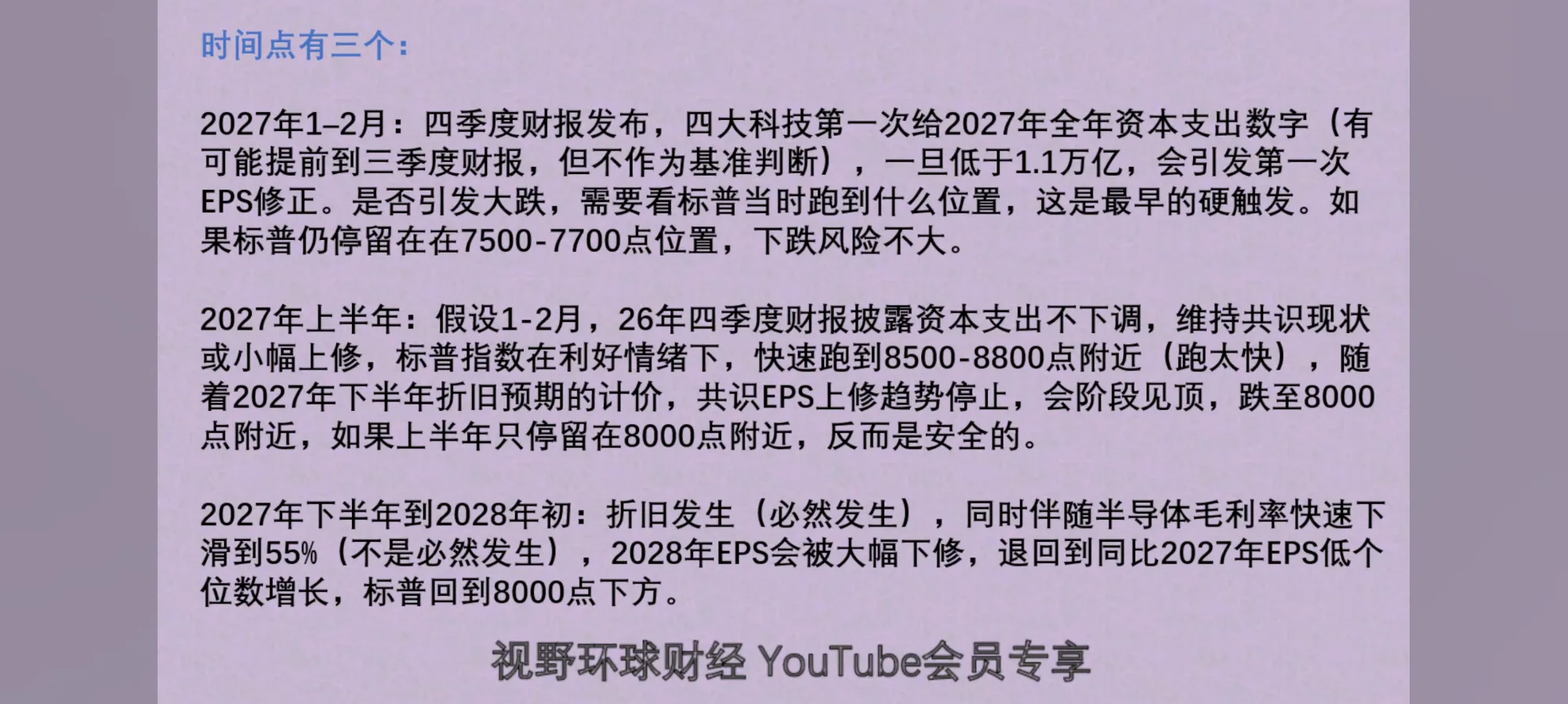
时间点有三个:
There are three key time points:
2027 年 1-2 月:四季度财报发布,四大科技第一次给 2027 年全年资本支出数字(有可能提前到三季度财报,但不作为基准判断),一旦低于 1.1 万亿,会引发第一次 EPS 修正。是否引发大跌,需要看标普当时跑到什么位置,这是最早的硬触发。如果标普仍停留在在 7500-7700 点位置,下跌风险不大。
January–February 2027: Q4 earnings releases, when the Big Four tech giants will provide full-year 2027 CapEx figures for the first time (this could potentially be moved up to Q3 earnings, but is not the baseline assumption). Once it comes in below 1.1 trillion, it will trigger the first EPS downward revision. Whether this sparks a major sell-off depends on where the S&P is trading at the time; this is the earliest hard trigger. If the S&P remains parked in the 7,500–7,700 range, downside risk is modest.
2027 年上半年:假设 1-2 月,26 年四季度财报披露资本支出不下调,维持共识现状或小幅上修,标普指数在利好情绪下,快速跑到 8500-8800 点附近(跑太快),随着 2027 年下半年折旧预期的计价,共识 EPS 上修趋势停止,会阶段见顶,跌至 8000 点附近,如果上半年只停留在 8000 点附近,反而是安全的。
First half of 2027: Assuming that in January–February, Q4 2026 earnings reports reveal no downward revision to CapEx—maintaining consensus or slightly upgrading it—the S&P 500 quickly surges to around 8,500–8,800 driven by bullish sentiment (running too fast). As depreciation expectations for the second half of 2027 get priced in, the upward trend in consensus EPS will stall, forming an interim peak before pulling back to around 8,000. If it merely stays near 8,000 throughout the first half, that would actually be safe.
2027 年下半年到 2028 年初:折旧发生(必然发生),同时伴随半导体毛利率快速下滑到 55%(不是必然发生),2028 年 EPS 会被大幅下修,退回到同比 2027 年 EPS 低个位数增长,标普回到 8000 点下方。
Second half of 2027 to early 2028: Depreciation sets in (a certainty), accompanied by semiconductor gross margins dropping sharply to 55% (not a certainty); 2028 EPS would then face substantial downward revisions, slowing to low single-digit YoY growth compared to 2027, sending the S&P back below 8,000.
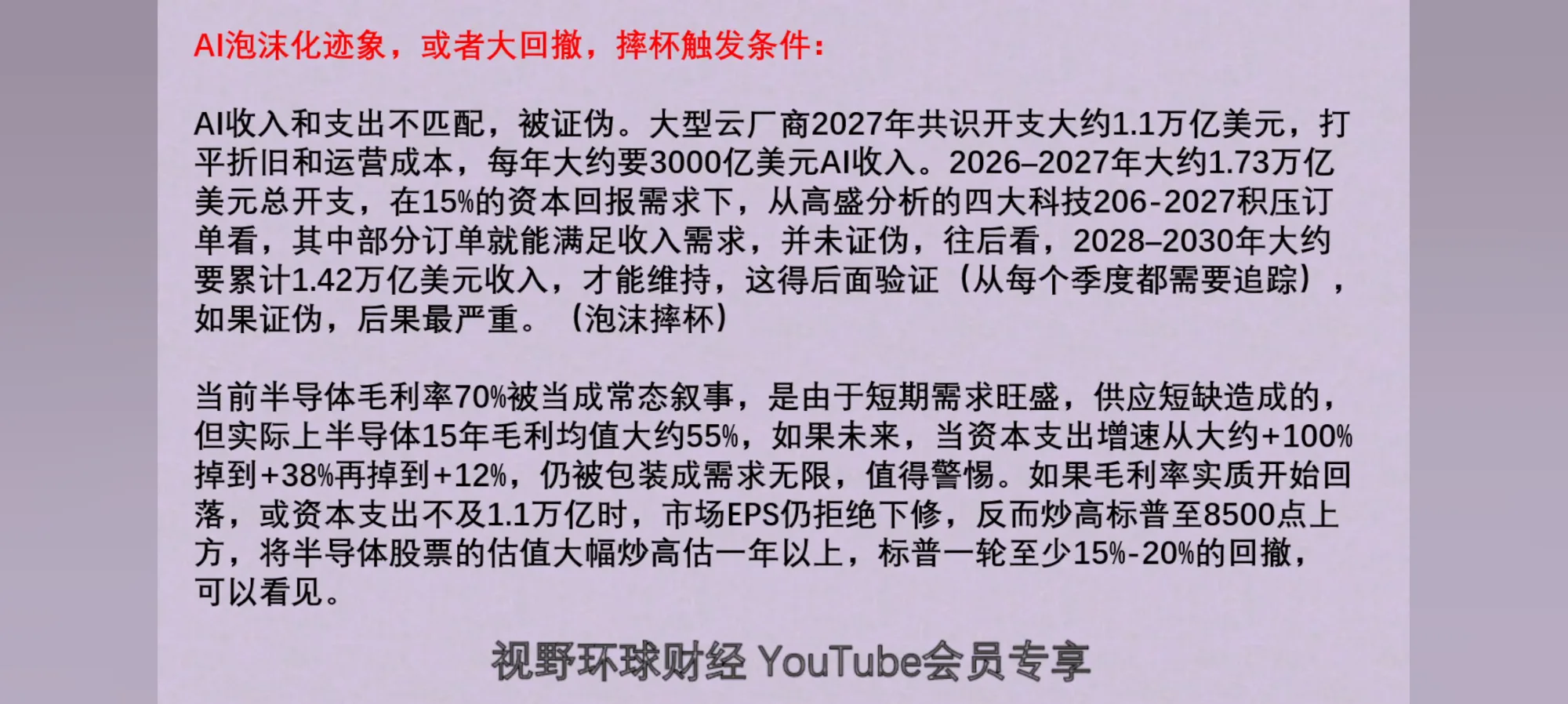
AI 泡沫化迹象,或者大回撤,摔杯触发条件:
Signs of an AI bubble, or conditions triggering a major pullback / bubble-bursting moment:
AI 收入和支出不匹配,被证伪。大型云厂商 2027 年共识开支大约 1.1 万亿美元,打平折旧和运营成本,每年大约要 3000 亿美元 AI 收入。2026-2027 年大约 1.73 万亿美元总开支,在 15%的资本回报需求下,从高盛分析的四大科技 206-2027 积压订单看,其中部分订单就能满足收入需求,并未证伪,往后看,2028-2030 年大约要累计 1.42 万亿美元收入,才能维持,这得后面验证(从每个季度都需要追踪), 如果证伪,后果最严重。(泡沫摔杯)
AI revenues and expenditures fail to match and get debunked. Consensus 2027 CapEx for major hyperscalers is around $1.1 trillion; breaking even on depreciation and operating expenses requires about $300 billion in annual AI revenue. With total CapEx of about $1.73 trillion over 2026–2027, under a required 15% return on capital, Goldman Sachs's analysis of the Big Four's 2026–2027 order backlogs suggests that just a portion of these backlogs can meet the revenue requirement, meaning it has not been debunked yet. Looking further ahead, a cumulative revenue of roughly $1.42 trillion will be needed over 2028–2030 to sustain this, which remains to be verified (requiring tracking every quarter); if debunked, the fallout will be most severe (a bubble-bursting drop).
当前半导体毛利率 70%被当成常态叙事,是由于短期需求旺盛,供应短缺造成的, 但实际上半导体 15 年毛利均值大约 55%,如果未来,当资本支出增速从大约+100% 掉到+38%再掉到+12%,仍被包装成需求无限,值得警惕。如果毛利率实质开始回落,或资本支出不及 1.1 万亿时,市场 EPS 仍拒绝下修,反而炒高标普至 8500 点上方,将半导体股票的估值大幅炒高估一年以上,标普一轮至少 15%-20%的回撤, 可以看见。
Current semiconductor gross margins of 70% are being treated as the normal narrative, driven by robust short-term demand and supply shortages. In reality, the 15-year historical average gross margin for semiconductors is around 55%. If CapEx growth decelerates in the future from around +100% down to +38% and then to +12%, yet continues to be packaged as infinite demand, caution is warranted. If gross margins begin a substantive pullback, or CapEx falls short of 1.1 trillion, while market EPS estimates still refuse to be revised downward—instead pushing the S&P above 8,500 and heavily overvaluing semiconductor stocks for more than a year—a pullback of at least 15%–20% in the S&P is clearly foreseeable.
视野环球财经 YouTube 会员专享
Vision Global Finance YouTube Members Exclusive